

Alright, folks! Today, I'm gonna dive into a topic that's super important for anyone in the construction or masonry game: how an Operator Trowel stacks up against a float trowel. As a supplier of Operator Trowels, I've seen firsthand how these tools play a crucial role in different applications, and I'm excited to share my insights with you.
Let's start with the basics. A float trowel is a well - known tool in the industry. It's typically used for the initial smoothing and leveling of freshly poured concrete or plaster. The float trowel has a flat, wide blade that helps to work the surface material, pushing down aggregate and closing up any pores. It's great for creating a relatively smooth base surface, which is essential before you move on to more refined finishing touches.
Now, when it comes to an Operator Trowel, it's a different beast altogether. Operator Trowels are designed for more specific and often more advanced tasks. They're commonly used for precision work, like edging, finishing small areas, or creating detailed patterns. The blade of an Operator Trowel is usually smaller and more maneuverable compared to a float trowel.
One of the key differences between the two is the level of control they offer. With a float trowel, you're working on a larger scale. You're trying to cover a wide area quickly and get a general smoothness. It's more of a brute - force approach in terms of smoothing out the surface material. But because of its size, it can be a bit less precise. You might end up with some unevenness in the corners or around edges.
On the other hand, an Operator Trowel gives you a much higher degree of control. The smaller blade allows you to get into tight spaces and work on specific details. If you're working on a project where you need to create sharp edges or smooth out small, intricate areas, an Operator Trowel is your go - to tool. For example, if you're doing a decorative concrete project with inlays or patterns, the Operator Trowel will let you work around those details with ease.

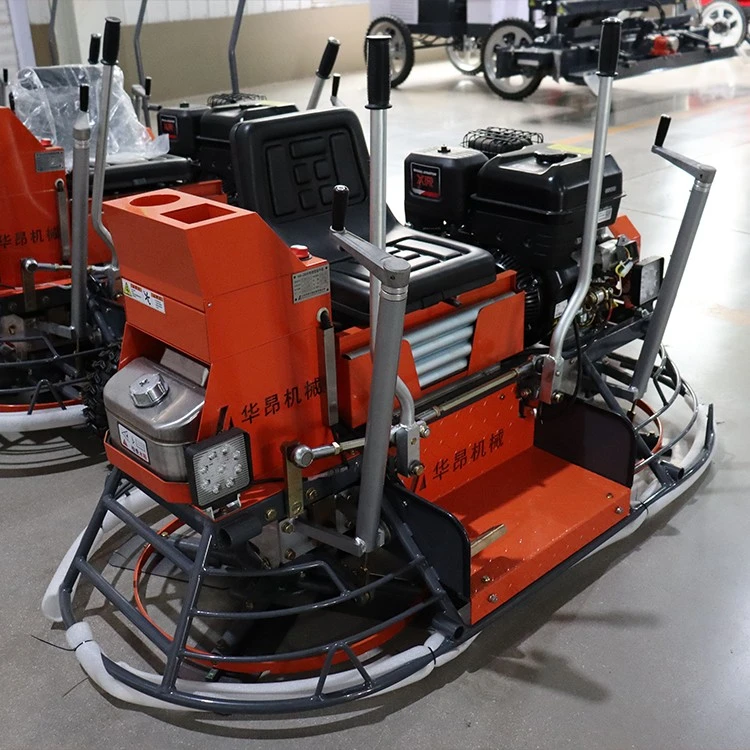
Another aspect to consider is the type of finish you're aiming for. A float trowel is great for achieving a flat, uniform finish on large surfaces. It helps to compact the material and gives you a smooth, consistent base. However, the finish may not be as refined as what you can get with an Operator Trowel. Operator Trowels can create a more polished and professional - looking finish, especially in areas where appearance matters the most.
In terms of the materials used, both types of trowels come in a variety of options. Float trowels are often made with stainless steel or aluminum blades, which are durable and resistant to corrosion. They need to be tough enough to handle the rough work of spreading and smoothing out concrete or plaster. Operator Trowels also use high - quality materials, but they may have more specialized blade designs. Some Operator Trowels have blades with a specific curvature or edge profile to help with different types of finishing work.
Let's talk about ergonomics. Float trowels are usually larger and heavier, which can make them a bit more tiring to use for extended periods. You need to have a good grip and some upper - body strength to handle the weight, especially when you're covering large areas. Operator Trowels, on the other hand, are generally lighter and more comfortable to hold. You can use them for longer periods without getting as fatigued, which is a big advantage when you're doing detailed work.
Now, let's consider the cost. Float trowels are often more affordable, especially the basic models. They're a staple in the construction industry, and there's a lot of competition in the market, which drives down the price. Operator Trowels, being more specialized tools, tend to be a bit more expensive. But when you think about the precision and quality of work they can help you achieve, the extra cost can be well worth it, especially for professional contractors or those working on high - end projects.
There's also the matter of availability. Float trowels are extremely common and can be found at almost any hardware store or construction supply shop. You won't have any trouble getting your hands on one. Operator Trowels, while still widely available, may not be as easy to find in every store. That's where I come in as a supplier. I can make sure you have access to high - quality Operator Trowels when you need them.
So, when should you choose an Operator Trowel over a float trowel? If you're working on a large - scale project where speed and general smoothing are the main goals, a float trowel is probably your best bet. But if you're dealing with a project that requires precision, detailed finishing, or working in tight spaces, an Operator Trowel is the tool for you.
For example, let's say you're pouring a large concrete driveway. You'll start by using a float trowel to spread and level the concrete quickly. Once the base is smooth, you can use an Operator Trowel to finish the edges, add any decorative details, or smooth out any small imperfections.
Another scenario could be a plastering job on the walls of a small room. You might use a float trowel to apply and initially smooth the plaster, but then switch to an Operator Trowel to create a flawless finish in the corners and around the edges.
In summary, both the Operator Trowel and the float trowel have their unique strengths and are essential tools in the construction and masonry world. Understanding the differences between them can help you choose the right tool for the job, which will ultimately save you time, effort, and money.
If you're interested in learning more about Operator Trowels or need to discuss your specific project requirements, I'd love to have a chat with you. Whether you're a professional contractor, a DIY enthusiast, or an architect looking for the best tools for your projects, I can provide you with the information and products you need. Don't hesitate to reach out and let's start a conversation about how Operator Trowels can improve your work.
References:
- Construction Tools Handbook
- Masonry Techniques and Best Practices